Light places.
Dark actions.
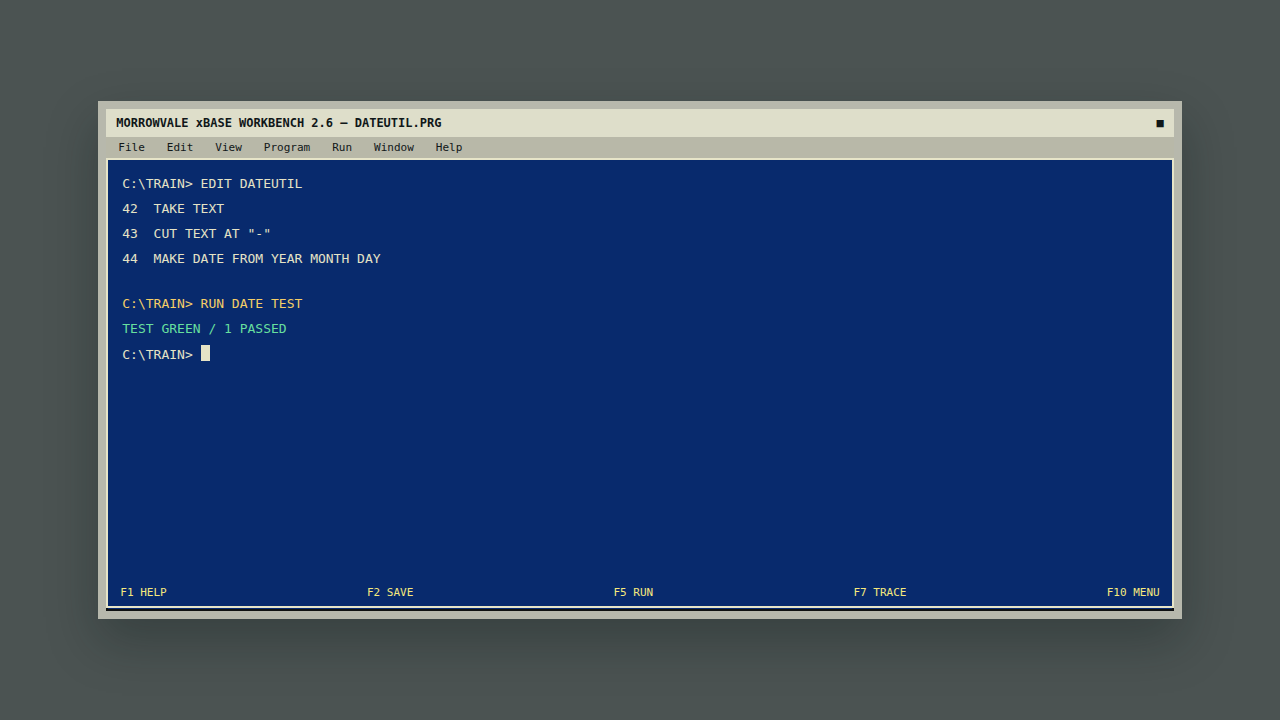
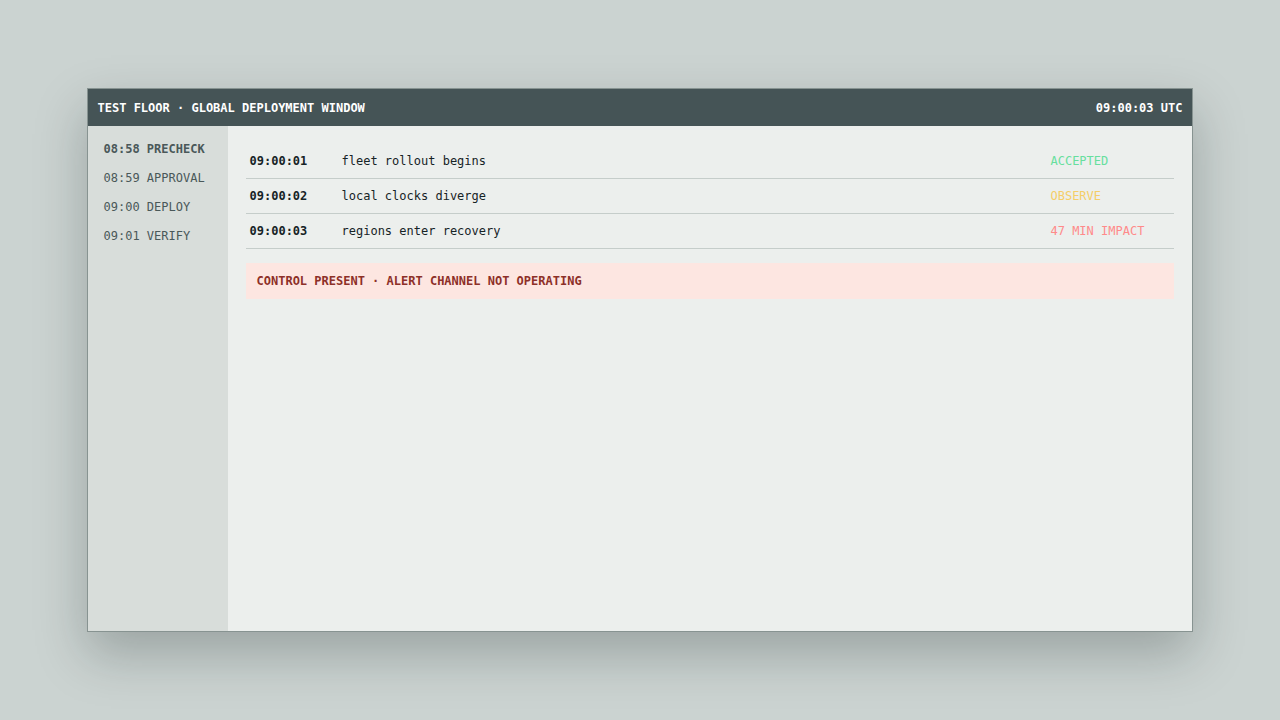
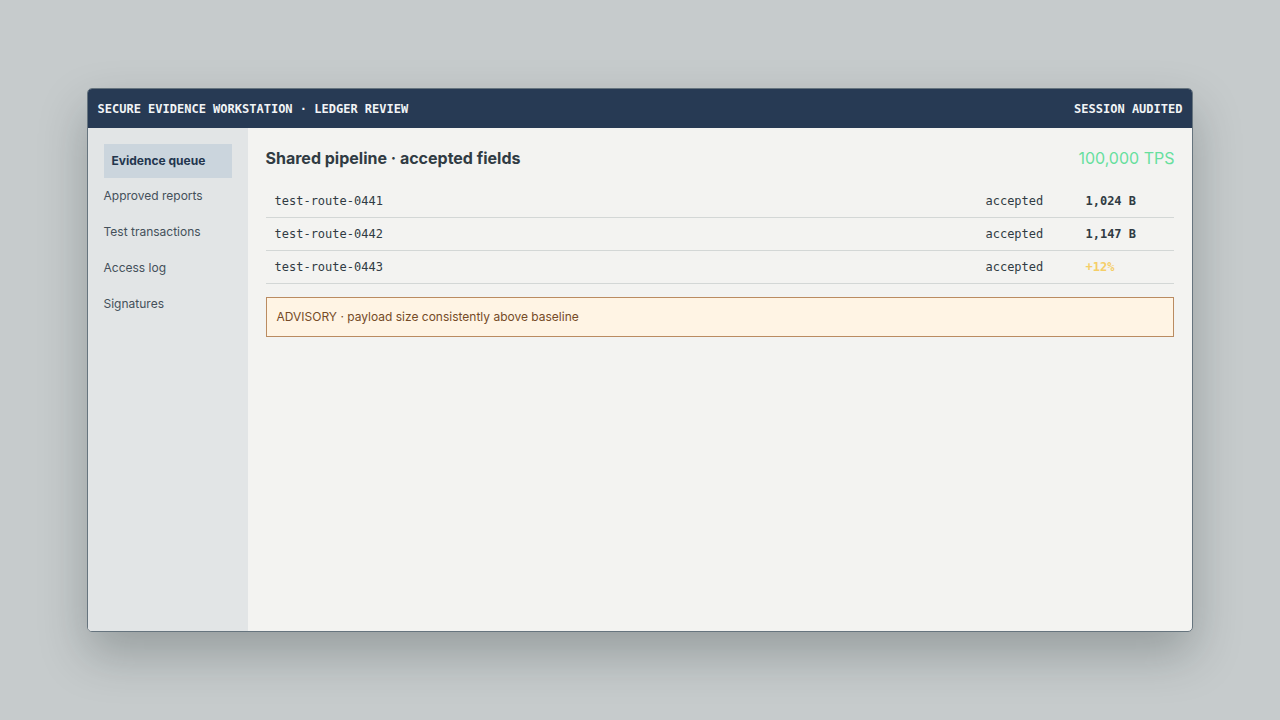
People work in bright, credible spaces. Terminals and evidence can become dark when attention narrows to machine state.
This is the current production system: grounded people and places, era-owned interfaces, readable evidence, selective motion and sound that always knows what the audience should hear first.
The films share semantic colour, timing discipline and legibility. Their rooms, camera language, operating systems and rhythm evolve with the institutions and years in the story.
People work in bright, credible spaces. Terminals and evidence can become dark when attention narrows to machine state.
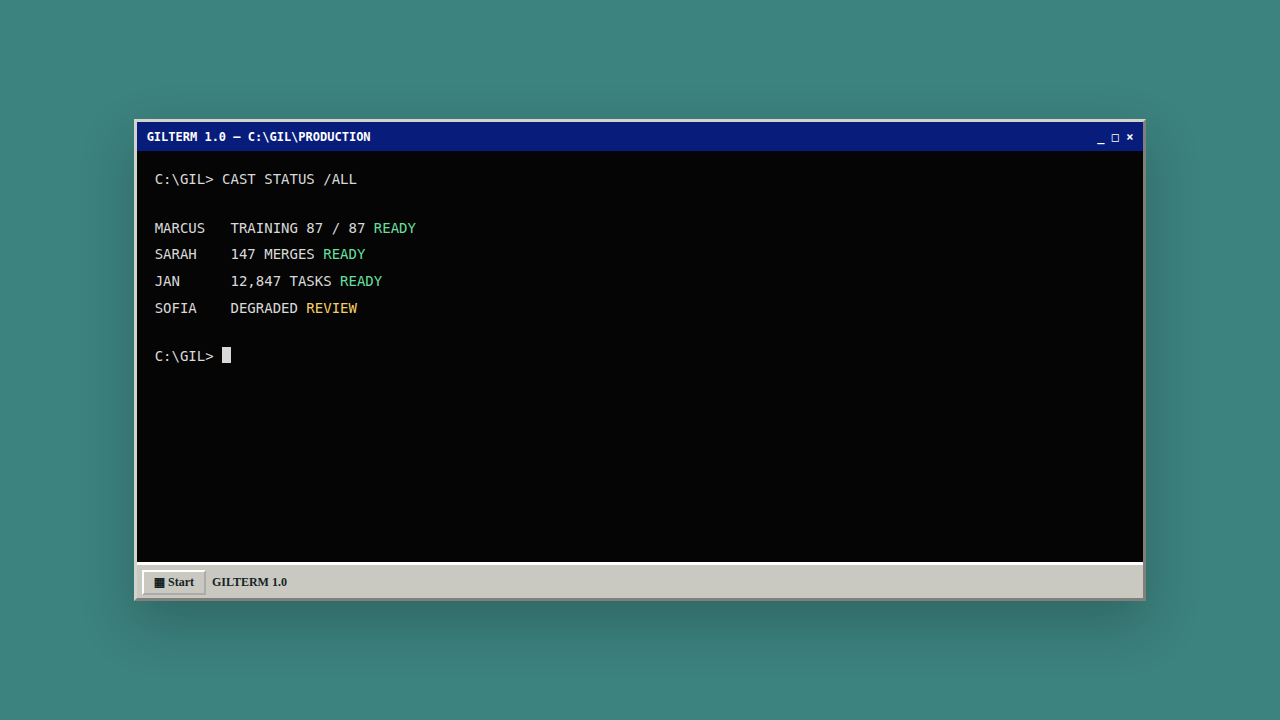
Remote access does not restyle the remote machine. Sam's Mac may show Gil's Windows desktop, but Gil's application stays Windows.
Charts, reports and messages reveal clause by clause while dialogue continues. Exposition should move the scene, not pause it.
A command, song, icon or workflow enters as ordinary texture, gains a second use, then returns with changed meaning.
The old all-dark presentation treatment is retired. Darkness is a motivated insert, not a default grade applied to every office and face.
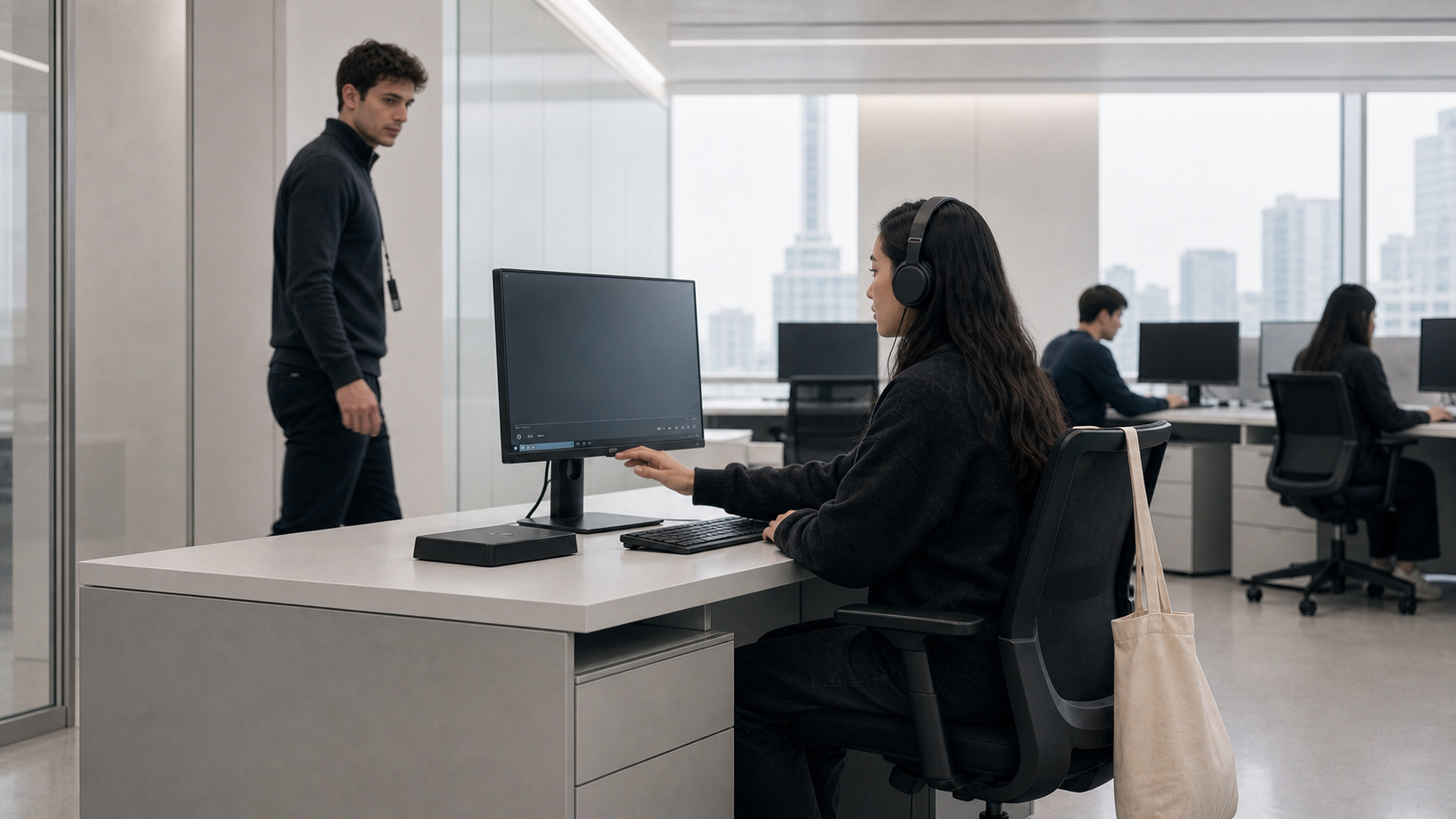
Natural faces, visible architecture and ordinary technical work. Clinical does not mean science-fiction.
A terminal may be dark inside the bright room. The cut earns the contrast.
Documents return to light. Highlighted evidence may lead into a darker analysis pane.
Domestic scenes use practical lamps, still-readable shadows and believable personal objects.
The shared hierarchy stays stable while terminal raster detail changes with the operating-system layer. Typography is judged at the final 1920×1080 raster, not at browser scale.
Playfair Display / GeorgiaTitles, aftermath and emotionally weighted narration.
Inter / system sansDialogue, questions, labels and contemporary workbenches.
JetBrains Mono / CourierTerminals, timestamps, metadata and warnings.
| Role at 1920×1080 | Minimum / target | Rule |
|---|---|---|
| Micro metadata | 15–16px | Never story-critical. |
| Labels / secondary copy | 16–18px | Short uppercase labels may track out. |
| Body / terminal | 18–20px | If it needs a pause solely to read, simplify it. |
| Dialogue cards | 24–32px | One spoken sentence per revealed turn. |
| Section statement | 40–64px | Use a narrow measure and a comprehension hold. |
| Hero / closing line | 64–128px | Responsive, with meaning carried by scale. |
Editorial copy directly over photography and a floating dialog card solve different contrast problems. They must not share one indiscriminate black overlay.
The compact haze begins just before this copy and extends only 18–24px beyond the rendered words.
Use an exterior or threshold shot for a meaningful location change. The strap appears once; the scene then earns closer coverage.
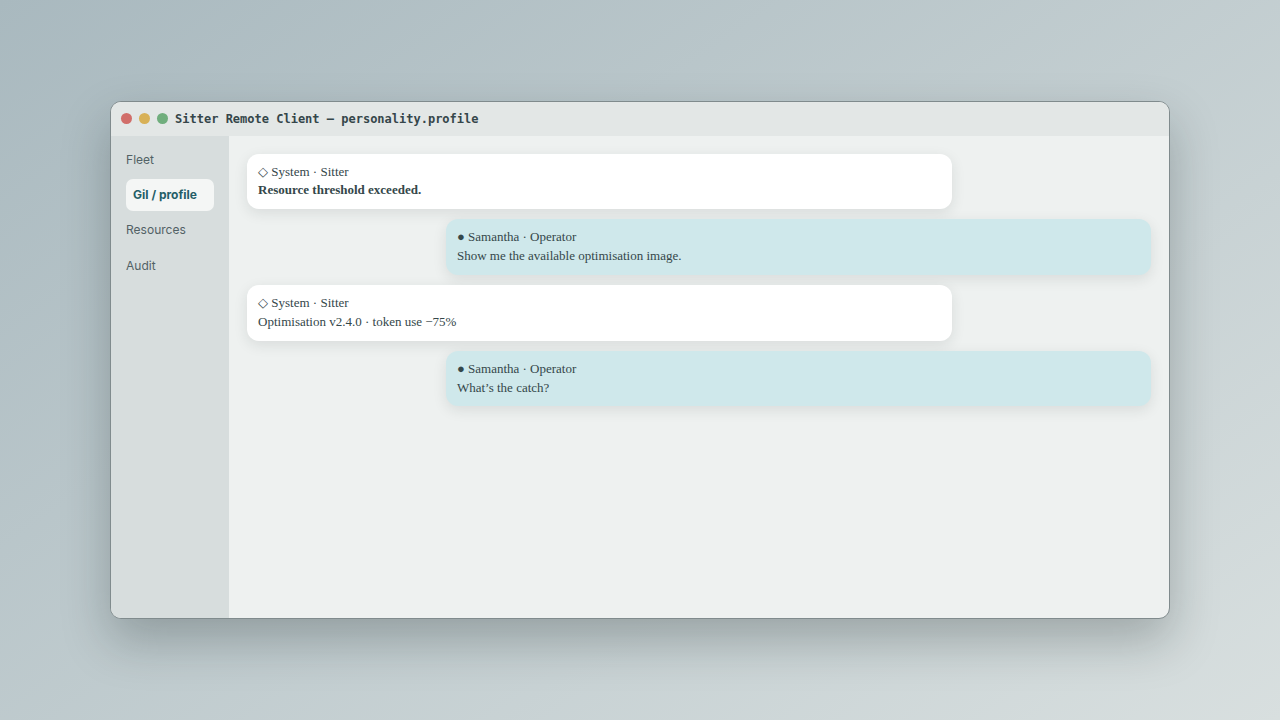
Side, colour and voice are insufficient in an MP4. Show the speaker name, role and icon on every conversational message.
Conventional subtitles are excluded from the picture master. Provide optional caption files separately for distribution.
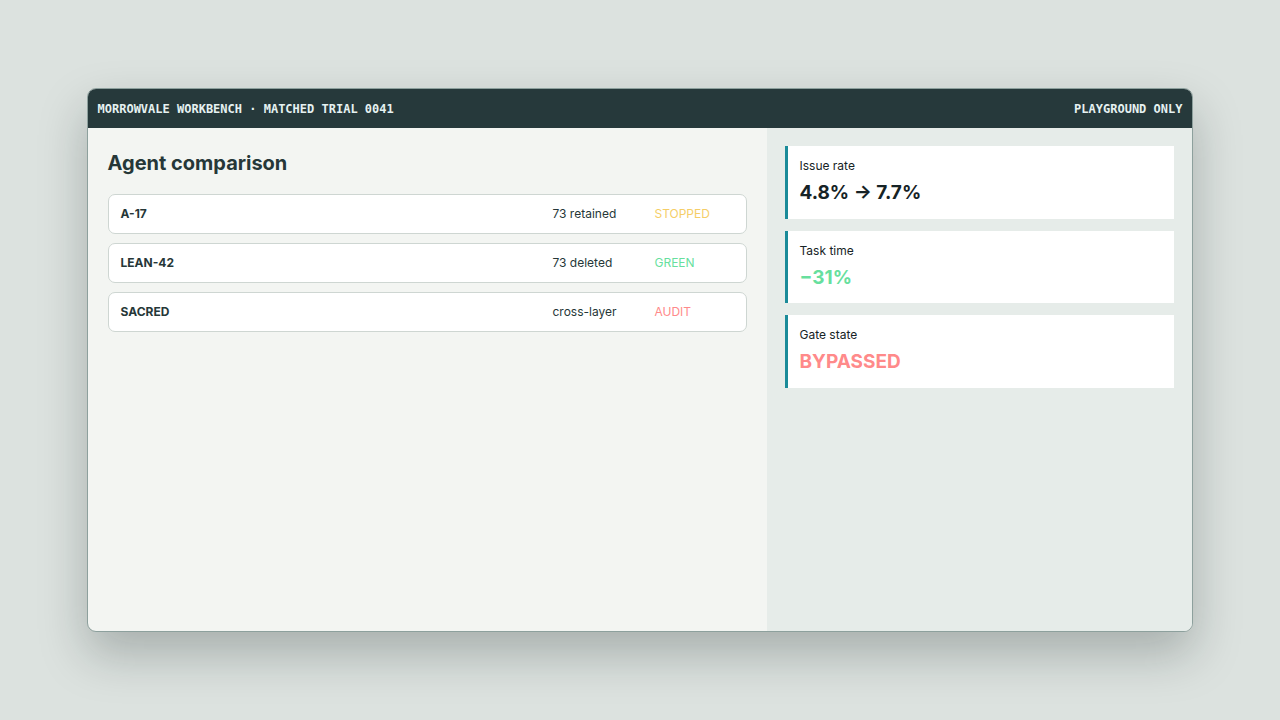
EVIDENCE 73 → 0 and the retention alert before SACRED asks what remains.These are capture-ready reference frames for image and video generation. Generated lettering establishes only density and era; exact content is authored in HTML.
The canonical exporter clock owns every visible effect. A static image may breathe, but terminals, charts, documents and real video plates never receive a generic zoom.
Establish the frame, begin the voice, reveal one second later, then hold after comprehension.
Workplace geographyLateral moves, phone/messenger inserts and retro terminal action.
Domestic intimacySlow pushes, VDU typing, Thronglet population and old-TV closure.
Matched comparisonLateral reveals, paired agents and test-stream output.
Mechanical consequenceFixed frames, timestamps, wipes, scope changes and CRT failure.
Institution to investigationGlides and ledgers become slow evidence pushes, matched actions and widening geography.
soft-cut · 0.14sDefaultA seven-to-eight-frame optical bridge that removes the brittle slide edge without announcing an effect.reaction / insertInstantCut to a listener, keyboard, evidence or object when speech creates a motivated window.match / actionContinuityCarry a meaningful shape or physical action across time, room or interface.cross-dissolveReflectiveReserve for elapsed time or memory. It is not a default scene transition.fade-blackBoundaryUse for a substantial change in time, place or point of view.wipe-leftProgressionUse when the story moves through a system or across geography.flash-whiteRare eventOne decisive failure only. The CRT ending uses its own bright discharge-collapse grammar.Every still or silent motion take starts from the same three references. This makes it possible to add cinematic coverage without changing a face, room, monitor era or device count.
Architecture, furniture, exposure, time of day and canonical equipment.
+Face, age, wardrobe, apparent seniority and episode chronology.
+OS owner, period, luminosity and broad layout; exact text comes later.
Use fragments to bridge sentences, hide interface-state changes and avoid asking a video model to preserve several faces at once.
A planned 3–4 second cut should normally come from a 6–8 second silent take. Choose the stable section against the existing voice waveform. Do not request lip sync.
In dialogue-heavy set sequences, aim for at least one moving plate per two still-image beats, then vary wide, medium, reverse, over-shoulder and insert.
Environment and score are separate authored lanes. Dense ambience and full music never compete at the same level beneath speech.
Target peaks near −1 dBFS. Gain-match new music over the section used in the edit, not by raw file peaks.
Music and ambience fade between states. Never step a bed abruptly or jump between tracks.
Key press, handset, warning horn, shield sting and CRT power-down occur only when the matching action is visible.
This page explains the shared grammar. Detailed truth remains in focused references, all linked from the single series index.
Review the actual 1920×1080 MP4 at ordinary playback size, not merely a live browser deck or isolated asset.